
Locally Grown, Artfully Designed: How Our Portland Florist Sources Sustainable, Fresh Flowers
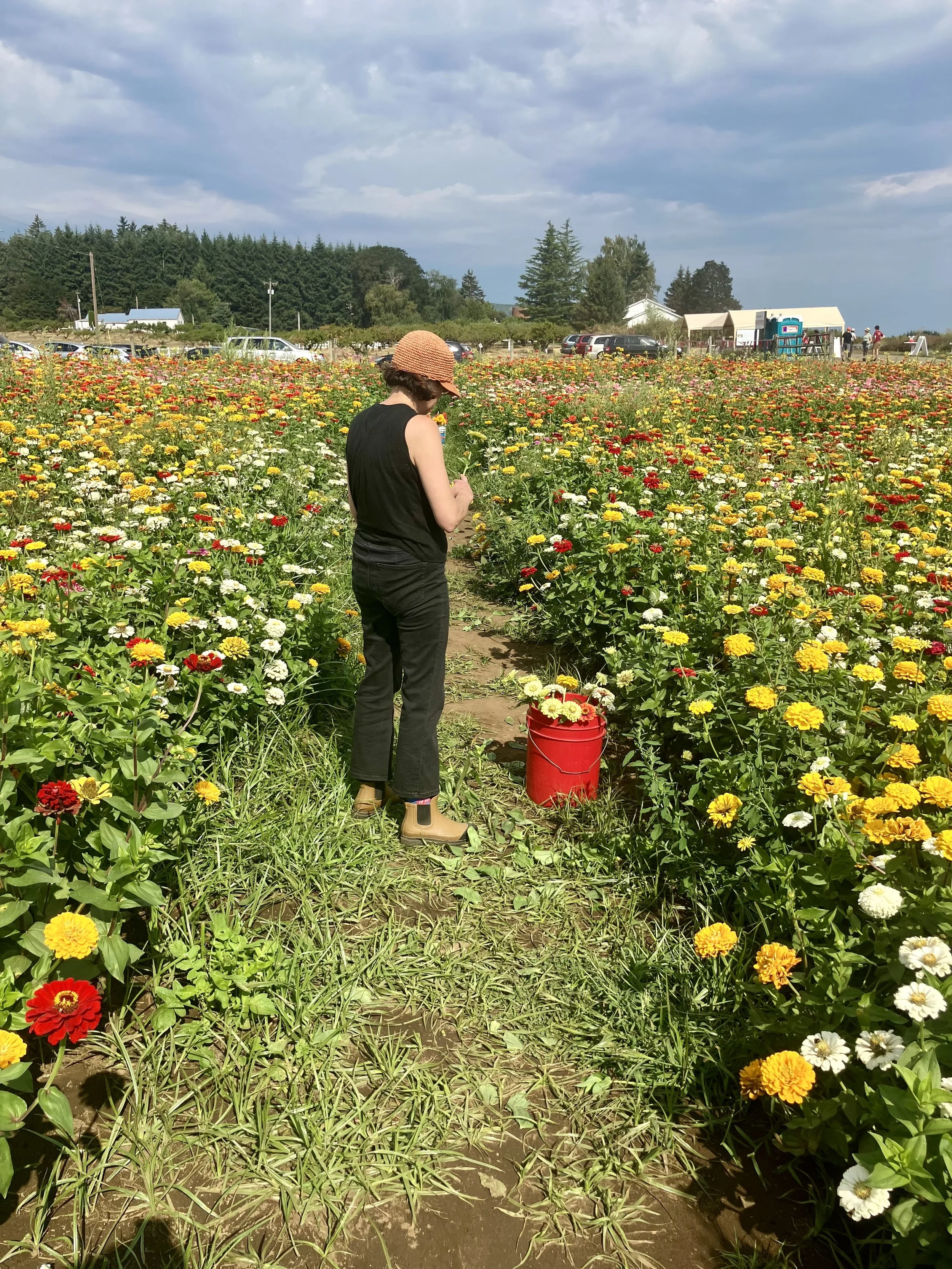
If you’ve ever wondered where your flowers were growing just days before they landed in your hands, on your table or in your big event, you’re already speaking our love language.
At our Portland floral studio, flowers are never just decoration. They’re a reflection of season, place, and intention. As a Portland, Oregon florist, we believe the most beautiful arrangements and floral installations begin long before design—out in nearby fields, with farmers who care deeply about the land they cultivate.
The Pacific NW is a botanical treasure—and this includes our organic flower farms!
Sourcing locally grown flowers in the Pacific Northwest isn’t a trend for us. It’s a commitment. From early spring through late fall, we work closely with flower farms near Portland, and even urban flower micro-farms like Lovely Harvest, to bring you the freshest, most sustainable blooms possible—perfect for weddings, events, and meaningful moments.
If you’re someone who values beautiful artistry, sustainability, curiosity about sourcing, and an end product that is as fresh as can be, you’re in exactly the right place with Portmanteau Flower Co and Floral Design.
Why Locally Sourced Flowers Matter
Choosing local flowers in season has a ripple effect that goes far beyond your custom arrangement or floral art design.
Many conventional flowers are shipped thousands of miles, often flown in from overseas (Ecuador, Columbia, Holland) and wrapped in plastic. They may be grown inorganically with heavy chemical use, cut weeks in advance of shipping, and stored in refrigeration before ever reaching a florist in this country. By the time they arrive, they may have lost much of their vitality—and their environmental cost is high.
By contrast, sourcing Pacific NW flowers allows Portmanteau to prioritize a few important aspects of floristry:
Eco-friendly floral design with fewer carbon emissions
Peak freshness, since flowers come from “our own backyard” as it were and travel far fewer miles
Seasonal beauty that reflects what’s naturally blooming
Support for local flower farms and small businesses
And from a design perspective? Locally grown flowers are simply more alive with richer colors, subtler movements, and longer vase life.
The PNW Growing Season: A Floral Treasure
One of the joys of being a Portland wedding florist is working within the incredible growing conditions of the our region. Our climate supports a wide range of flowers from March through November, giving us endless creative inspiration.
Seasonal Flowers We Source Locally Near Portland
Spring (March-May): Tulips, ranunculus, anemones, hellebore, flowering branches, early lilac
Early Summer (June): Peonies, foxglove, delphinium, sweet peas, campanula
Summer (July-August): Dahlias, garden roses, cosmos, lilies, zinnias, scabiosa, astilbe, astrantia, geum
Fall (September-November): Chrysanthemums, asters, heirloom dahlias, celosia, lisianthus, grasses, seed pods
Designing with seasonal flowers for weddings and events allows each arrangement to feel grounded, intentional, and truly of-the-moment-precious.
Building Relationships with Local Flower Farms
We don’t just buy flowers—we build relationships.
We partner with local flower farms near Portland, Oregon—like Lovely Harvest and Sauvie Island Farm—many of which are woman-owned, family-run, and committed to sustainable growing practices. These farmers prioritize soil health, biodiversity, and low-impact methods, often growing unique or heirloom varieties you won’t find through mass wholesalers.
In addition, 100% of the vendors at the Oregon Flower Growers Association on Swan Island are local.
Because we source directly, we’re able to:
Access unique, hard-to-find blooms
Request specific varieties for weddings
Ensure ethical growing and labor practices
This connection between farm and florist is what allows us to create wedding and event flowers that feel personal, thoughtful, and truly one-of-a-kind.
Sustainable Floral Design Starts with Seasonality
One of the most environmentally responsible things a florist can do is design with the seasons.
Rather than forcing out-of-season flowers into a design, we ask: What’s blooming beautifully right now—and how can we highlight it?
Seasonal floral design:
Reduces reliance on imported flowers
Lowers refrigeration and transportation emissions
Results in cohesive, natural color palettes
Produces longer-lasting arrangements
For couples planning a Portland wedding or Portland event, this means your flowers will reflect not only your style and color scheme—but the exact time of year you’re celebrating.
Winter Flowers in the Pacific Northwest: What to Expect
Transparency is part of sustainability.
In winter, local flower availability in Oregon becomes very limited. While some greenery, branches, and specialty items are available locally, fresh flower options are severely limited. Some local farms, like Petercort, grow roses and lilies, presumably in greenhouses.
So, during winter events, we thoughtfully supplement with:
Responsibly sourced flowers from warmer regions such as southern California and Mexico
Trusted suppliers with ethical and environmental standards
Dried and preserved botanicals for texture and longevity
Even when local sourcing is minimal, we remain intentional—designing with care, restraint, and environmental awareness without sacrificing lushness.
Fresh Flowers Make a Visible Difference
Because our flowers are grown close to home (except in winter), they’re often harvested just days before design. That freshness means:
Longer vase life
Better hydration and structure
Natural movement and softness
More vibrant photographs
For wedding and large events, this freshness is key—especially during long celebration days inside or hot summer events outdoors in the sun.
Eco-Friendly Practices Beyond Flower Sourcing
Sustainability doesn’t end with where flowers are grown.
As an eco-conscious Portland florist, we also focus on:
Foam-free or reusable floral mechanics—although at times and dictated by design we will occasionally use Oasis black, which is a new 85% plant-based foam that is still not completely biodegradable. (To our knowledge, they are working on a 100% biodegradable foam.)
Composting floral waste
Minimal plastic use and recycling plastics through Ridwell
Smart ordering to reduce excess
Every step of our process is guided by the belief that beautiful design should also be responsible.
Why Local, Sustainable Flowers Matter for Weddings and Events
Your wedding or event flowers help tell your story. Choosing locally sourced, sustainable flowers in Portland Oregon means:
Your celebration feels authentic and intentional
You’re supporting local farms and artists
Your event has a reduced environmental footprint
Your floral design feels timeless and customized, not automatic and ordinary
It is a meaningful choice—one that aligns beauty with values.
Our Floral Philosophy, then:
We believe flowers should be:
Seasonal, not forced
Artful, not generic
Rooted in local place and purpose
By how we source throughout most of the year, we honor the land, our farming partners, the fleeting beauty of each PNW season, and your choice to trust and support us in your own search for a beautiful, ethical experience of flowers.
Ready to Design with the Seasons?
If you’re planning a wedding or event in Portland and are drawn to locally grown, sustainable floral practices, we’d love to work with you.
Reach out to our team at Portmanteau to inquire, to schedule a consultation, to explore what’s blooming for your date, or to learn more about our approach.
Together, we’ll create flower pieces that are thought out, expressive, eloquent, and sustainably rooted in the natural beauty of our PNW home.
Let’s make something beautiful—grown close to home!!!